By Adhar Talati, Founder – LEOZ, The Art of Ambience
A Memory That Never Left Me
Years ago, I visited a client who had recently moved into a stunning penthouse in Ahmedabad. The apartment had everything—marble floors, panoramic views, and the latest technology. Yet, when I entered the living room, I felt something was missing. The furniture, though expensive, felt clinical. The space was impressive, but it was not inviting.
Later, the client admitted that despite the grandeur, he rarely spent time in that room. “It just doesn’t feel like me,” he said. That sentence has stayed with me. It reminded me of a truth I’ve carried into my work at LEOZ: furniture is not just about design—it is about psychology.
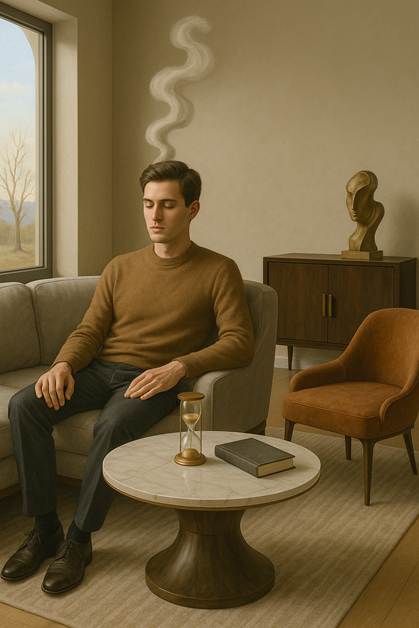
The way we shape our spaces shapes the way we feel, live, and connect. This is what I call the psychology of space.
The Science Behind Ambience
Psychologists have long studied how environments influence human behaviour. From the calming effect of natural light to the stimulation caused by bright colors, every detail impacts our state of mind. Furniture, being at the core of a home’s ambience, acts as the bridge between aesthetics and psychology.
- Comfort impacts wellness. A poorly designed chair can cause stress, while a well-upholstered lounge can relax the body and, in turn, the mind.
- Colors influence emotion. Deep blues calm the nerves, warm oranges energise, while muted neutrals encourage focus.
- Shapes affect perception. Rounded edges are subconsciously associated with safety, while sharp lines suggest power and formality.
At LEOZ, every piece is crafted with this philosophy: luxury is not only what you see, but also what you feel.
An Anecdote: The Home Office That Transformed
I recall designing a modular home office for a young entrepreneur. He had been working out of a cramped corner with mismatched furniture, constantly complaining of fatigue. We replaced his setup with a clean-lined teakwood desk, an ergonomic chair upholstered in breathable leather, and warm lighting positioned to reduce strain.
Two weeks later, he called me and said: “I didn’t just get a new office—I got a new mindset.”
That’s the power of space psychology. A functional, well-designed environment doesn’t just look better—it creates better moods, sharper focus, and more energy.
Living Room: Where Warmth Meets Connection
In India, the living room is often where families bond and guests are welcomed. The choice of furniture here sets the emotional tone.
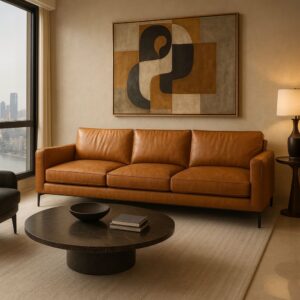
- A generous sofa signals openness and hospitality.
- A sculpted coffee table becomes the centrepiece of conversations.
- Accent chairs add personality and individuality.
When these elements are thoughtfully curated, the living room becomes a stage for togetherness. Without it, the space risks becoming a showroom—impressive but lifeless.
Bedroom: The Sanctuary of the Mind
One of the most overlooked aspects of furniture psychology is in the bedroom. Your bed, wardrobes, and side tables quietly influence your quality of sleep and rest.
- Beds with soft headboards promote a sense of comfort and security.
- Warm wooden finishes reduce visual noise, aiding relaxation.
- Clutter-free wardrobes reduce mental stress by bringing order into daily routines.
I often tell clients: “If your bedroom doesn’t calm you, it’s not doing its job.” Luxury here is not excess—it is peace, silence, and healing ambience.
Dining: Nourishment Beyond Food
The dining table is more than a place to eat. It is a ritual space. Families reconnect here, conversations unfold, and traditions live on.
The design of the dining set has a direct effect on how we relate to food and each other:
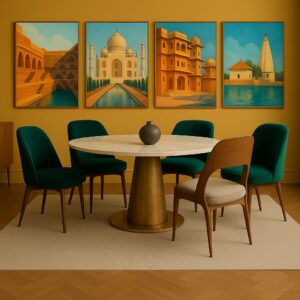
- A large marble-topped table can inspire grandeur and togetherness.
- Upholstered chairs encourage longer, more comfortable meals.
- Subtle lighting makes dining feel intimate, slowing down the pace of life.
One of our clients once said after installing a Leoz dining set: “We eat slower now, and we talk more.” That, to me, is ambience at work.
How Ambience Shapes Lifestyle
The impact of furniture on psychology isn’t just emotional—it’s deeply practical:
- Wellness: Ergonomically designed seating prevents strain, reducing stress on both body and mind.
- Productivity: Organised, purpose-driven furniture in workspaces improves focus.
- Relationships: Comfortable, inviting spaces foster deeper social connections.
- Identity: A personalised ambience reflects one’s individuality, boosting self-esteem.
This is why ambience is never just decoration—it is lifestyle architecture.
The Leoz Philosophy: Crafting Ambience
At Leoz – The Art of Ambience, our vision has always been to create furniture that is not only luxurious in appearance but transformative in experience. With one of the largest state-of-the-art manufacturing facilities in Gujarat, we combine craftsmanship and technology to ensure each piece of furniture carries both beauty and psychology.
We design with this conviction:
- That a sofa can be a hug after a long day.
- That a wardrobe can be order in a chaotic morning.
- That a coffee table can be a memory-keeper of conversations.
Luxury is not about more. Luxury is about meaning.
The Spaces That Shape Us
When I look back at my journey as a designer and founder, I realise furniture has always been about people first. Spaces are mirrors of our inner worlds. A cluttered room creates a restless mind; a well-balanced ambience nurtures peace and joy.
As Salvador Dalí once suggested in his surreal art—perception is reality. And in furniture, perception becomes ambience, which in turn becomes lifestyle.
At Leoz, we design furniture not just to fill spaces, but to shape moods, inspire wellness, and redefine living. Because ultimately, the psychology of space is the psychology of life itself.